

Why Circularity Matters in Electronics
Making your supply chain more circular and, by extension, more sustainable can result in a reduced impact on the environment, diminished costs, and improved customer satisfaction. The Boston Consulting Group, a corporate strategy firm, found that companies who improved their environmental performance “could not only improve the planet’s prospects but also significantly improve their business results” by adopting a circular economy model.
A vital element of an environmentally-optimised business model is an emphasis on fostering a circular economy. This is particularly crucial within the electronics industry, which depends heavily on finite resources (such as cobalt and other precious metals). According to the Ellen MacArthur Foundation, a charity committed to creating a circular economy, circularity is based on three principles:
- Eliminating waste and pollution.
- Circulating products and materials (at their highest value).
- Regenerating nature.
Why Regulation Is Raising the Stakes
Circularity is also becoming a compliance matter, not just a values one. Currently, only around 40% of WEEE generated in the EU is formally collected and recycled. The European Commission has opened a review of the WEEE Directive, with a formal revision expected in 2026 that could turn it into a directly binding regulation with tighter extended producer responsibility requirements. For manufacturers, that means getting ahead of circularity now is far cheaper than reacting to enforcement later. Our overview of WEEE regulations and global compliance covers what these changes mean in practice.
Investors are watching too. Supply chain consultants Proxima have noted that 85% of investors believe corporations that lack supply chain sustainability standards will see share prices fall over the next decade. The risks of improper e-waste disposal, regulatory, financial, and reputational are no longer theoretical.
Component Sense's Role in the Circular Economy
Component Sense aims to lead electronic manufacturers towards zero waste. We recognise that to achieve this ambitious goal, we must align ourselves with the above principles and foster a circular economy model for the electronics industry. Firstly, we actively work to reduce e-waste and minimise our carbon footprint. We are also passionate about our role in regenerating nature and work with the reforestation charity One Tree Planted to plant two native trees for every order placed with us.
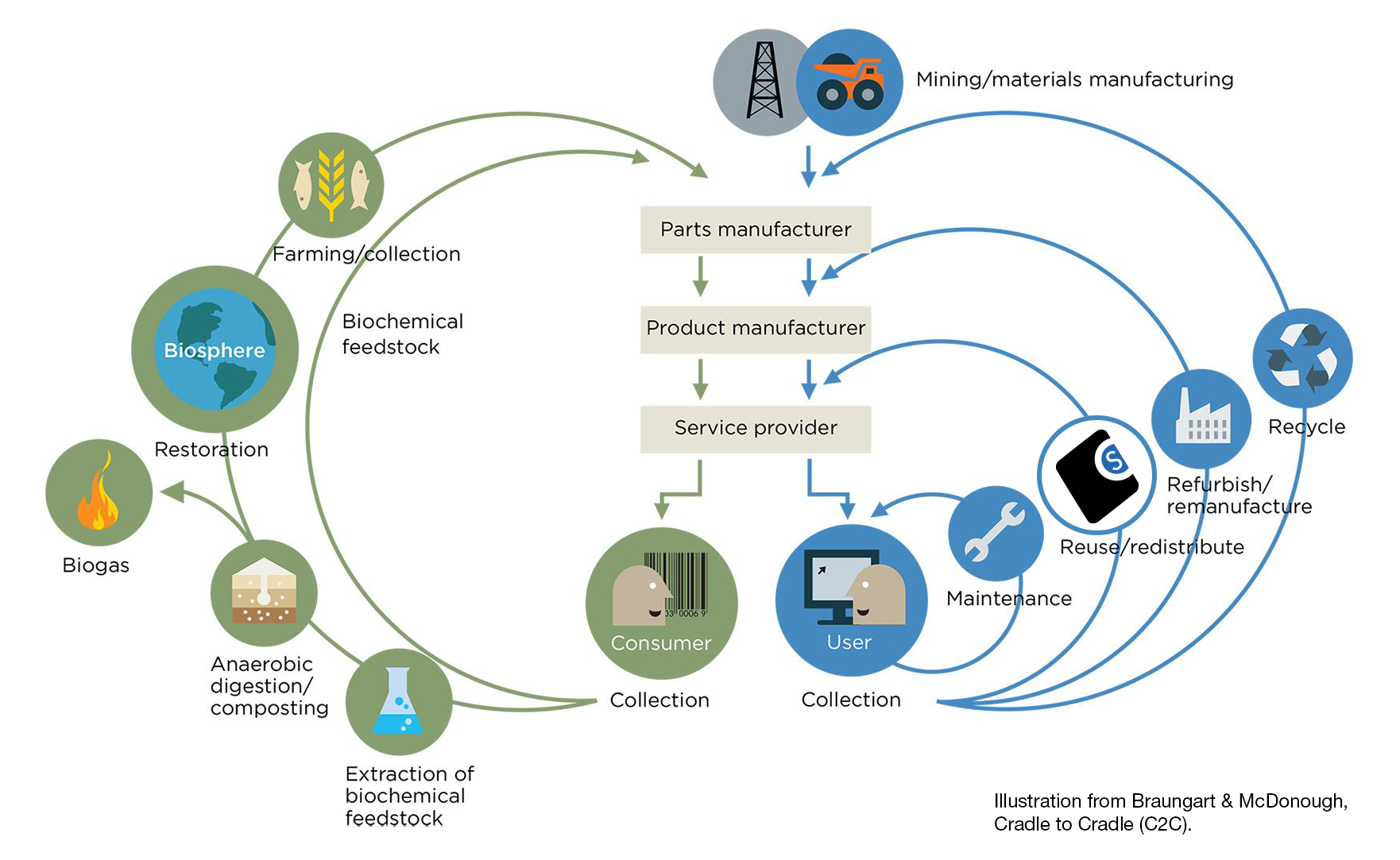
Fig. 1. Component Sense’s role in an electronics circular economy model.
Our position as experts in the reuse and redistribution of excess and obsolete electronic components means we are already preventing significant volumes of e-waste from reaching landfill. We work with One Tree Planted to plant two native trees for every order placed with us, and our operations are structured around keeping components in circulation rather than letting them become waste.
We also hold ISO 9001 certification; a quality management standard that underpins every aspect of how we handle, verify, and redistribute stock. For buyers, that means components sourced through us are fully traceable and backed by a 12-month warranty. For sellers, it means their stock is handled to the same standard they would expect from any tier-one supply chain partner.
The Human Cost of E-Waste
For Component Sense, this mission is personal. In September 2024, our Founder and CEO Kenny McGee visited Agbogbloshie in Accra, Ghana, once the world’s largest e-waste dumping site, to see firsthand what happens to electronics that never make it back into circulation.
"I truly believe that operating sustainably also makes financial sense. I anticipate that, in the near future, electronic manufacturers simply will not be able to afford inaction."
— Kenny McGee, Founder and CEO, Component Sense
That visit directly shaped how we talk about what we do. The impact of e-waste is not an abstraction for us, it is something our leadership has seen in person, and it is part of why the InPlant™ model exists.
How InPlant™ Extends Circularity Further
InPlant™, in short, is an inventory management tool that helps OEMs and EMSs deal with their excess stock efficiently and profitably. When we introduce InPlant™ into our customers’ manufacturing plants, we can then update excess inventory on a live and automated basis. Grant Rutherford, Component Sense’s Chief Technical Officer, says that:
“InPlant™ is a way for us to move your stock with minimal fuss.”
As InPlant™ is in-house and automated, this means we can redistribute stock at the earliest possible stage, thereby increasing the potential return on investment. In doing so, we fulfil the second principle of the MacArthur circular economy model and can circulate products and materials at their highest value. Furthermore, we can:
- Reduce the number of components being sent to landfill.
- Accurately update customers on the number of components available, thus making the supply chain more efficient.
- Decrease shipping distances, resulting in lower carbon emissions.
- Minimise the number of components becoming excess and obsolete in the first place!
The Business Case for Circular Supply Chains
Component Sense is working hard to bring InPlant™ to as many international OEMs and EMSs as possible. Our system is an efficient and economical way for electronics manufacturers to achieve not only their environmental goals but will also result in a long-term sustainable business model. Proxima, supply chain consultants, have stated that “[investors are] looking for real, measurable progress … 85% of investors believe corporations who do not have supply chain sustainability standards will see share prices fall as a result over the next decade.” Optimising your supply chain with tools such as InPlant™ is a way to keep your OEM or EMS ahead of the competition.
What Inaction Costs Sellers
For sellers weighing whether to act, the numbers speak for themselves. Most electronic manufacturers hold excess inventory worth roughly 10% of their annual revenue, often without realising it. Left on the shelf, that stock keeps costing money: insurance can run around $1 million a year on a sizeable holding, warehouse storage adds up to roughly $203,125 a year per 625 pallets, and stock that’s eventually scrapped can mean losses of around $5 million on $100 million of inventory.
The longer excess sits, the more it depreciates, and the less useful it is to anyone. Identifying and redistributing it early is not just better for the planet; it is also the more profitable choice. Our guide to FIFO vs LIFO inventory management explains how the method you use to rotate stock directly affects both your balance sheet and your obsolescence exposure.
Get Started
Are you interested in learning more about how InPlant™ can benefit your business and the environment? If so, we would love to hear from you. Our CEO, Kenny McGee, would be happy to answer any questions and can be found on LinkedIn here. Alternatively, you can reach us through our website.
We look forward to moving towards a circular economy together!