

-May-20-2024-03-58-37-0422-PM.png)
The automotive industry has evolved over the last several decades, shifting from a focus on mechanical advancements to incorporating complex electronics.
Environmental concerns and the urgency of addressing climate change have largely driven this movement.
While the move away from fossil fuel dependency to electric vehicles (EVs) seems obvious in reducing carbon emissions, it has not been without its roadblocks.
EV growth has been deeply uneven across regions. China has raced ahead. NEVs now account for 50% of all new car sales, making it the first major market where electric vehicles have overtaken combustion engine cars. In contrast, the UK registered a 23.4% BEV market share in 2025, while the US lags at around 9%, with growth constrained by policy rollbacks and reduced consumer incentives.
EV sales are not the only focus for vehicle and electronics manufacturers. Microchips are prevalent in all modern vehicles, whether powered by a combustion engine or electricity. A symbiotic relationship exists between vehicle manufacturers and EMSs (electronics manufacturing services) that produce their chips. If any category of vehicle sales declines, it creates a ripple effect that impacts all participants in the supply chain and can result in high levels of excess stock
So, what factors have really shaped the current automotive market conditions? What are our predictions for the near future? And what can you do about excess parts that were over-forecasted to meet perceived demand? Keep reading to find out.
The COVID-19 effect on the automotive industry
The COVID-19 pandemic, geopolitical tensions, and natural disasters have disrupted global supply chains and closed down factories for both vehicle manufacturers and the plants producing critical components and PCBs (printed circuit boards) needed for all vehicle types, not just EVs.
All-in-all, these conditions created a perfect storm, resulting in extended lead times and some buyers waiting several years for their new cars. Despite this, electronic car registrations increased 41% in 2020, even though global car sales dropped by 16%.
The early pandemic EV gold rush can be attributed partially to:
-
Increased climate change awareness
-
New government incentives and regulatory frameworks like the ZEV (zero emission vehicle) mandates
-
Technology improvements
-
Higher sales prices to capitalise on the demand.
During the COVID-19 pandemic, many manufacturers inflated demand projections and over-forecasted their purchasing requirements. In reality, the rush to increase EV production outpaced realistic consumer demand, which slowed as the world emerged from the pandemic. This pivot led to huge quantities of excess and obsolete (E&O) parts, particularly electronic components.
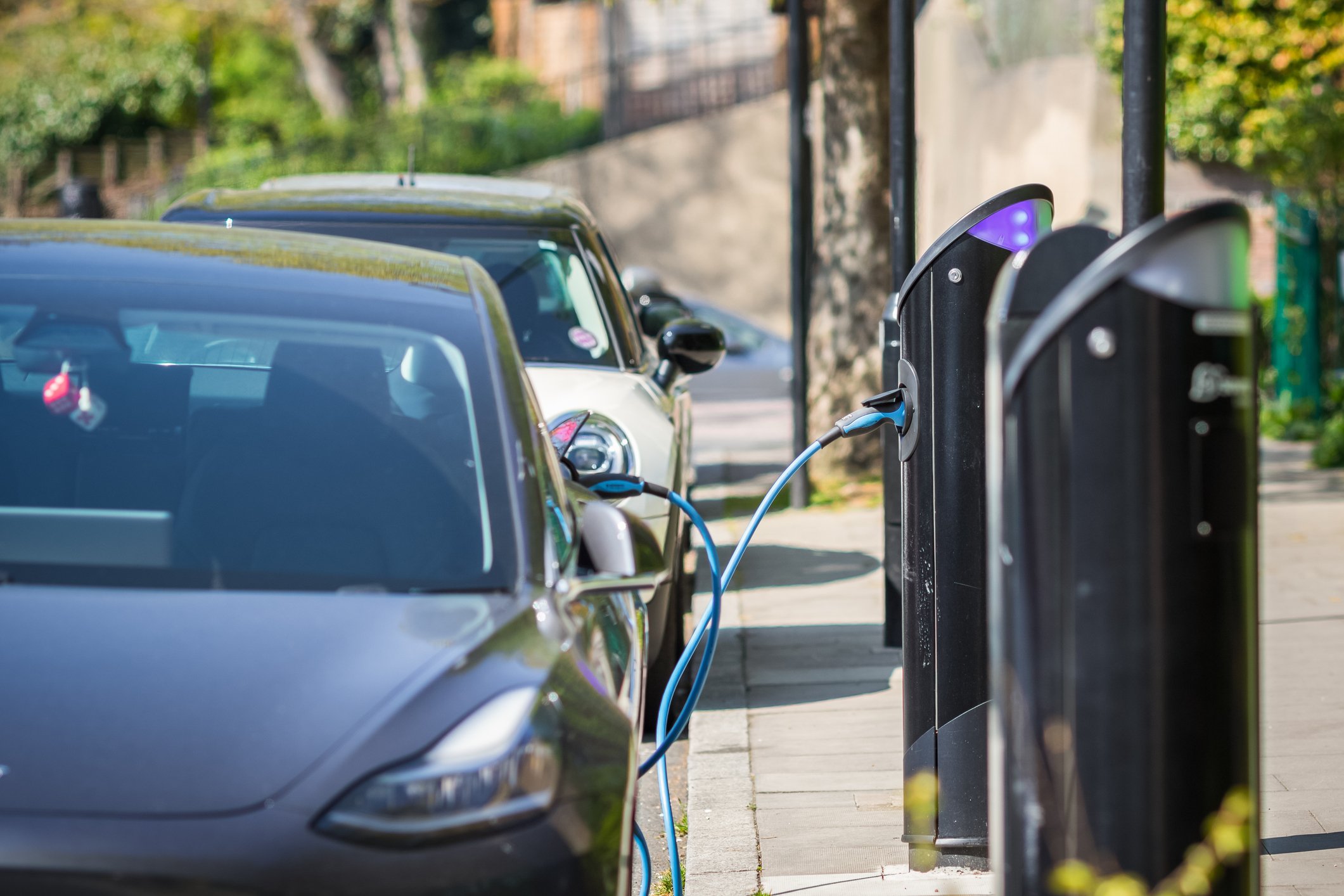
By 2025, global EV sales reached 20.7 million units, a 20% year-on-year increase and a new record, with December 2025 alone seeing 2.1 million EVs sold worldwide.
However, the headline figure masks starkly different regional trajectories. China accounted for the majority of that growth, while the US saw growth of just 1% in 2025 before federal EV tax credits were removed, with US EV sales projected to fall by as much as 29% in 2026.
In the UK, the market is growing steadily, with BEV share reaching 23.4% in 2025 and forecast to reach approximately 29% of new registrations in 2026.
This unpredictability has only made managing inventories for vehicle manufacturers and the plants making their chips and PCBs more difficult. In most arrangements, vehicle manufacturers cannot simply return their excess stock to their EMS, meaning this excess negatively impacts finances and takes up valuable warehouse space. Not to mention, all of this stock has the potential to end up as electronic waste.
The semiconductor dimension: why EVs amplify the stakes
A standard internal combustion engine vehicle contains around 1,200 semiconductor chips. A modern EV does not just need more components than a traditional car; it needs fundamentally more intelligence.
Every system, from battery management and motor control to driver assistance, thermal regulation, and in-car connectivity, relies on dedicated semiconductor chips to function. Where a standard ICE vehicle contains around 1,200 chips, a typical EV requires closer to 2,000, and in some cases up to three times as many. As EVs become more sophisticated, chip content per vehicle will continue to increase.
The implication for anyone in the supply chain is straightforward. S&P Global projects the automotive semiconductor market will nearly double from $82 billion to $149 billion by 2030, which means the stakes around accurate forecasting and the consequences of getting it wrong are growing considerably.
This matters because EV adoption has not followed a straight line. Before COVID-19, EVs were a niche product. The pandemic triggered a sharp spike. Registrations jumped 41% in 2020, even as overall car sales fell 16%, per the IEA, and manufacturers responded by scaling up semiconductor orders to match.
But when demand emerged unevenly across regions rather than uniformly, those orders became a liability. Excess semiconductor stockpiled, capital was tied up in components that could not be moved, and in most cases there was no route to return them to the supplier.
Automotive semiconductor demand was still feeling the effects of that oversupply as recently as Q1 2025. When a single EV can require thousands of chips, even a small forecasting error compounds quickly.
Automotive industry predictions
Like many industries, the automotive sector has grappled with financial challenges due to high inflation, soaring interest rates, persistent supply chain disruptions, and fluctuating economies. Despite this, it is widely accepted that EV adoption is inevitable, so governments continue to invest heavily in EV technology and infrastructure. The Biden administration has committed $7.5 billion through the Bipartisan Infrastructure Law to build a network of 500,000 EV charging stations across the US by 2030.
Even with heavy government investment and subsidies, Western vehicle manufacturers are most concerned about the future of EV production. In recent years, Chinese EV competitors, like BYD, have released EVs at significantly lower price points.
The price gap between Chinese and Western EVs has not just persisted. It has deepened.
By 2025, the average EV in China will cost around $25,465, roughly 3% less than the average petrol car, a milestone no other major market has come close to achieving.
In Europe and the US, EVs still carry a significant price premium over equivalent combustion engine vehicles, driven by higher labor costs, less developed battery supply chains, and smaller government subsidies.
That cost advantage is reinforced at the component level: Chinese battery packs averaged $84 per kWh in 2025, 44% cheaper than North American equivalents and 56% cheaper than European ones, per BloombergNEF. The result is a competitive landscape that is increasingly difficult for Western manufacturers to close. BYD has now overtaken Tesla as the global battery-electric volume leader, cementing China's position at the center of the EV market.

This newfound competition from China has led some European manufacturers to pivot their strategies toward a high-end, less price-driven niche. To reduce costs going forward, Western manufacturers may introduce innovative techniques such as giga casting, while electronics suppliers might operate at 80% capacity to maximise their returns.
Hybrid vehicles are also gaining in popularity, at least in the short term. In 2025, hybrid sales continued to outpace pure EVs in the US market, where consumer hesitancy around range and price remains significant. This shift could be particularly driven by concerns about the range of stand-alone EVs and their high price points. Hybrid vehicles serve as a fantastic stepping stone to full EVs and help to reduce carbon emissions, so these sales are still positive.
Looking ahead, we hope for increased global investment in EV charging stations. The UK alone surpassed 87,000 public charge points by the end of 2025, with roughly 1.3 million public devices added globally in a single year.
This will address a key barrier to purchase for would-be buyers worried about range. Many seem hopeful about further investment and EV buy-in, with EVs still projected to account for 60% of global vehicle sales by 2030.
Some EVs operate using upwards of 50,000 electronic components. However, microchips are needed for all modern vehicles. No matter the pace of EV adoption, it is safe to assume that the requirement for electronics in transportation will only increase over time.

Effectively manage component inventory levels with Component Sense
While Component Sense does not have all the solutions for how vehicle manufacturers should approach current market conditions, we can help with their E&O stock. Many of the automotive companies we work with mention sitting on too much inventory due to recent over-forecasting. This presents a significant financial risk and means manufacturers are less agile.
If you want to get rid of your excess quickly and are willing to accept an upfront cash offer, choose Component Sense’s Outright Purchase solution. Our business can bid on your excess stock within 24 hours. If the offer is accepted, we can uplift your E&O inventory within 48 hours.
To retain ownership of your E&O inventory while we actively list and sell it, choose Component Sense’s Consignment solution. Not only will your stock still be stored off-site while it is listed and sold, but consignment returns, on average, five times more income than outright purchase. Email us today to discuss any one of our redistribution options.