


Every electronic component has a lifespan. The typical product lifecycle from introduction to end-of-life runs between 10 and 15 years, but the products that those components go into often run for 20, 30, or longer. That gap is where production lines stall, engineering teams scramble, and procurement budgets take an unexpected hit.
Effective obsolescence management means anticipating that gap and acting before it becomes a crisis. This guide covers how to build a proactive approach, covering everything from monitoring component lifecycles to sourcing traceable alternatives when a part reaches end of life.
What is electronic component obsolescence?
Component obsolescence occurs when a semiconductor manufacturer or supplier discontinues a part, ceases production and withdraws it from authorised distribution. From that point, buyers can no longer source the component through relevant channels.
There are three stages to be aware of:
Active: At this stage, the component is in full production, and authorised distributors can carry the stock for sale. Lead times are usually predictable.
End-of-life (EOL): The manufacturer has announced a last-time-buy (LTB) date. Stock still exists, but it is finite. This is the critical window to act, so either buy forward, redesign, or identify a trusted redistribution source.
Discontinued: Production has stopped, and authorised stock is exhausted. The only options available are redistribution marketplaces, grey-market brokers, or a redesign.
The distinction between EOL and discontinued matters enormously. Acting during the EOL window gives you options. Waiting until a component is fully discontinued narrows them.
Why component obsolescence is getting harder to manage
The pace of product innovation in the semiconductor industry has accelerated with the rise of AI infrastructure. Manufacturers refresh component families more frequently, driven by competitive pressure, process node migrations, and shifting market demand.
Three factors are making obsolescence management more complex today:
Product longevity vs. component lifecycle. Industrial equipment, medical devices, defence systems, and automotive platforms are designed for decades of service. The semiconductors inside them are not. A component specified at design-in may reach EOL before the product does.
Supply chain concentration. A significant share of advanced semiconductor production runs through a small number of fabs. When capacity shifts (as it did during the 2020–2022 shortage), authorised availability can disappear faster than expected, accelerating effective obsolescence.
Bill of materials (BOM) complexity. A single product may contain hundreds of components, each with its own lifecycle. Managing obsolescence at the BOM level, rather than component by component, requires systematic monitoring — not manual checks.
The real cost of reactive obsolescence management
Most manufacturers don't discover a component is discontinued until they try to order it. By then, the options are expensive and limited.
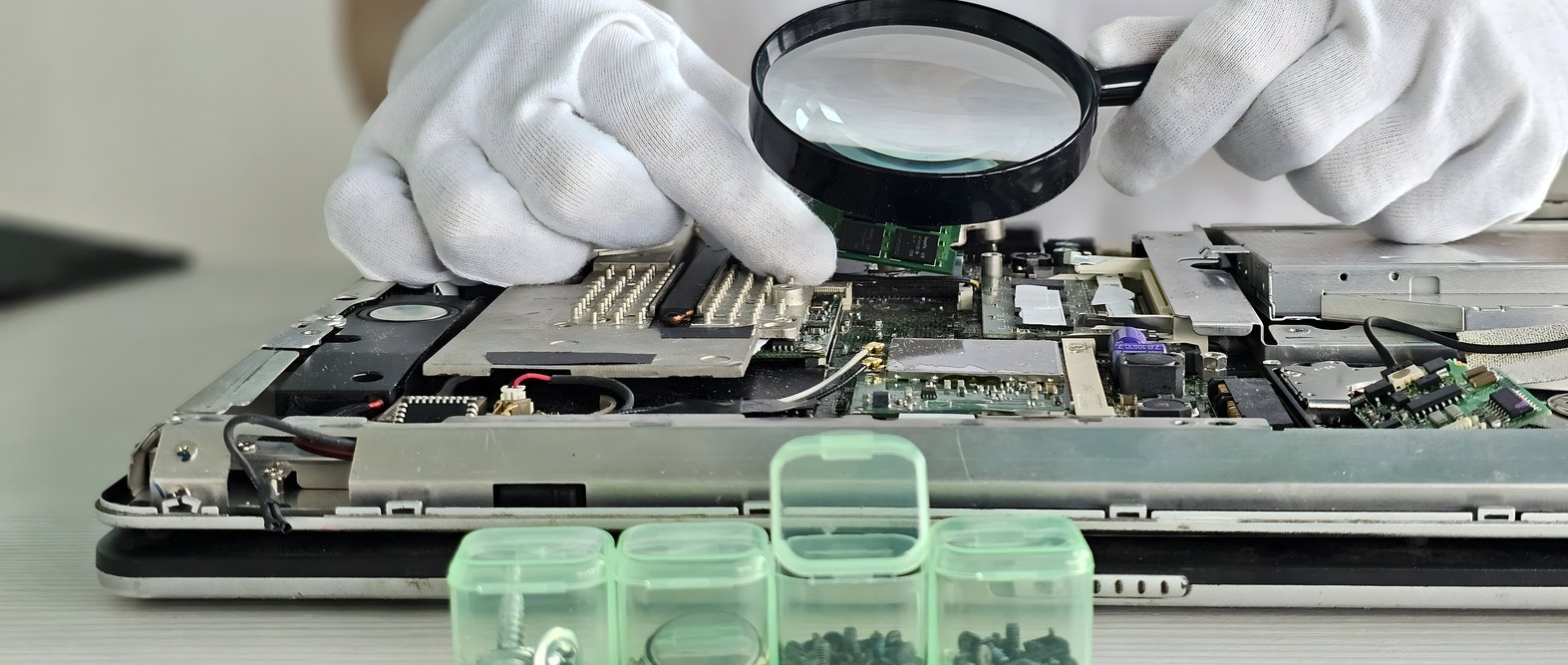
Emergency procurement from unknown brokers carries a risk of counterfeit. A counterfeit component entering your production line can cause product failure, recalls, and liability exposure far exceeding any procurement savings. As Morag Dine, Head of Growth at Component Sense, puts it: "Identifying your excess at the earliest possible stage is crucial. That way, we can market your stock quickly and at its highest value." The principle holds for buyers too. The earlier you identify an obsolescence risk, the more options you have.
Forced redesign is the other fallback. Respecifying around a new component takes engineering time, re-qualification, and new tooling. For low-volume or mature products, it may not be economically viable at all.
The cost of a production line stoppage varies by sector, but it is always significant. For automotive OEMs, downtime measured in hours can cost hundreds of thousands of dollars.
Building a proactive obsolescence management programme
Reactive procurement is a symptom of a system problem, not a one-off event. Here is what a structured obsolescence management programme looks like in practice.
1. Establish lifecycle monitoring at BOM level
The foundation is visibility. Every component in your active BOMs should be tracked against its manufacturer lifecycle status. Most component distributors and ERP platforms offer PCN (product change notification) feeds; configure these so your team receives alerts when a manufacturer announces a last-time-buy (LTB) date or discontinuation.
For complex BOMs, purpose-built obsolescence management tools integrate directly with MRP systems and automatically flag at-risk components. The key is moving from manual spot-checks to systematic, continuous monitoring.
2. Define your response thresholds
Not every EOL notice requires the same response. A component used across twenty active product lines with a three-year EOL window is a different problem from one used in a single, high-margin platform with a two-month LTB window.
Build a tiered response matrix:
- High criticality / short window: Initiate a last-time-buy immediately. Simultaneously identify redistribution sources for post-LTB supply.
- High criticality / long window: Model forward demand, evaluate redesign feasibility, and establish a redistribution relationship while stock is still active.
- Lower criticality: Monitor quarterly. Flag for next product revision cycle.
3. Qualify redistribution sources before you need them
Grey-market brokers will always offer to help in a crisis. The risk is that you have no way to verify authenticity, and counterfeits are disproportionately concentrated in the exact components that are hardest to source: high-demand, long-discontinued semiconductors.
The time to qualify a redistribution partner is before you have an urgent requirement, not during one. Look for suppliers who can demonstrate full traceability to tier-one OEM or EMS sources, hold ISO 9001 certification, carry a 12-month warranty on all parts, and will provide complete documentation. These are non-negotiable for manufacturers with quality management systems and regulated applications.
Component Sense sources exclusively from verified tier-one OEM and EMS manufacturers. Every part is traceable to its original production facility. With 150,000+ lines of genuine E&O stock and a 4,500+ international buyer network, parts that have disappeared from authorised distribution are often available through redistribution. The BOM Matching service automatically alerts buyers when matching stock becomes available, turning reactive sourcing into a managed process.
4. Build inventory recovery into your obsolescence strategy
Many manufacturers buy additional stock during the EOL window to protect future production. That's the right decision. Forecasts change, customer demand shifts, and product lifecycles evolve. As a result, some level of excess and obsolete (E&O) inventory is often unavoidable.
The key is not to eliminate excess stock altogether, but to have a plan for recovering value from it. Components that are excess to one manufacturer can be business-critical to another, facing an obsolescence challenge.
By establishing a redistribution strategy alongside your forward-buy strategy, you gain greater flexibility when making EOL decisions. You can secure the supply you need today while creating a route to recover working capital from any future surplus. Buying discontinued stock and selling excess stock are two sides of the same market.
What to do when a component is already discontinued
If you are reading this because a component in your BOM is already discontinued, here is the priority sequence:
Check redistribution inventories first. A significant volume of discontinued components circulates within the E&O market. Verified redistribution channels carry genuine, traceable stock with a warranty. This is often the fastest and most cost-effective path to production continuity, before engineering time is spent on a redesign.
Request a quote for any discontinued part.
Assess redesign feasibility in parallel, not as a first resort. Redesign takes time. While engineering evaluates alternatives, procurement should be exhausting traceable redistribution options. Do both simultaneously, not sequentially.
Do not engage unknown brokers without due diligence. If a broker cannot provide full traceability documentation, decline. The cost of a counterfeit entering your product (in recalls, warranty claims, and liability) dwarfs any price saving.
Obsolescence management for sellers: the other side of the equation
If your organisation has gone through a product transition, a programme change, or an over-purchase, you are likely holding excess stock of components that are highly sought after in the redistribution market, precisely because they are discontinued.
Most manufacturers hold excess inventory worth approximately 10% of their annual revenue. On a $100M factory, that figure represents a significant recoverable asset, but only if acted on early. Components depreciate. Date codes age. The same stock that recovers up to 70% of cost today may recover significantly less in 18 months.
Component Sense's Consignment solution lists your excess as 'in stock' to a network of 4,500+ international buyers, making parts up to 10x more likely to sell than 'available' listings. You retain ownership. Stock can be retrieved. And Component Sense never cherry-picks; the full inventory is taken, not just the high-value lines.
For large OEMs managing E&O at scale, Component Sense embeds InPlant™ directly in your facility, integrating with your MRP system to identify E&O at the earliest possible stage, before it depreciates.
Sources:
- Component Obsolescence in 2026: Risks, Drivers, and Impact — Part Analytics
- TSMC, Samsung, and Intel: Who's Leading the Semiconductor Race? — PatentPC
- Manufacturing Network Downtime Costs: $1.4 Trillion Loss, $260,000 Per Hour Per Plant in 2026 — IndexBox (citing 2024 Siemens report)
- 2024 Counterfeit Electronic Parts Report — ERAI via Supply Chain Connect